Showing posts with label online stock trading and investments. Show all posts

Wednesday, November 17, 2010

tracking personal finances

In the digital age, nobody likes carrying a lot of cash around – I know I don’t, anyway. This can be especially frustrating when you go to keep track of your expenses, who you owe money to, who you lent some to and just where it all goes over the month.

As always, there are a lot of apps out there to help you do various things with your money. There are apps to figure out how to manage your money, oversee expenses, send money to people, keep track of who owes you, and more.

In this article, I’ll show you some of the applications you can take advantage of to do everything I’ve mentioned here, leaving you free to pick and choose the apps that will make your life easier.

id="more-58352">

How to Manage Your Money

I’m beginning to learn just how difficult managing your expenses can be. For the most part, I use my debit card tied to my checking account to make purchases. I use it at the grocery store, when I go out to lunch with my coworkers and on the weekend when I’m out exploring the city.

At the end of the month, my bank statement looks pretty ridiculous. All of these small transactions make it difficult to sift through. I still know what everything is, but if I wanted to see where I could be saving some money I wouldn’t know the first place to look.

Sounds like you? Even if it doesn’t, you could still reap the benefits of visually being able to manage your money. These apps make the process a lot easier.

Mint

style="text-align: center;">

Mint has been on our radar since back in 2007 when Karl wrote about it. Plain and simple, if there is one app I want you to keep in mind it’s this one.

Mint is a free personal finance application that can help you compare your bank accounts, credit cards, CDs, brokerage and 401(k) to the best products out there. It offers a visual representation of your finances and is very easy to set up. Use it to manage your budget, get credit card advice and understand investing.

Here’s a great video showcasing an overview of Mint’s features:

For some helpful tips on how to use Mint, check out Bakari’s article on How To Use Mint To Manage Your Budget & Spendings Online.

Thrive

Thrive (directory app) is also a great application if you’re looking for a simple way to keep track of your spending. With Thrive, you get an overall Financial Health score, which is one number that shows you how financially fit you are. It also shows you scores in other areas and offers you advice on how to make improvements.

style="text-align: center;">

Thrive breaks down your spending for you and shows you where you can save. Compare your current budget to last month’s, as well as view a six month average and target budgets to follow.

Texthog

Looking for an even simpler way to track expenses? Texthog (directory app) lets you easily store, organize and access your receipts, expense reports and more via text message, the web, your email, iPhone and even Twitter.

style="text-align: center;">

A Texthog free account gives one user the ability to track expenses, view unlimited reports and get budget/bill reminders. Take a photo of your receipts and utilize tags and categories to keep track of everything.

To check out Texthog on your iPhone, you can find the application on iTunes.

Venmo

Speaking of text messages, have you heard of Venmo? Venmo (directory app) is a nice little app that lets you pay and charge friends with your phone. Send and receive secure payments by linking your card to your account. This allows you to settle small loans you give/get by eliminating paper transactions for small amounts of money.

style="text-align: center;">

To use Venmo, all you do is create an account. You can then send and receive money to other accounts simply by using text commands in SMS. Accept a “trust” request from your friends and make transactions without having to authorize them by texting a 3 digit code.

This is a pretty solid application that I have been using a lot lately with my friends/coworkers. It’s great for when a bunch of you are out to lunch and not everyone has cash on them. “I’ll just put it on my card and Venmo you all afterwards.”

Owe Me Cash

style="text-align: center;">

Owe Me Cash is a nice app I found recently that is also very easy to use. If someone owes you money, you just sign into Owe Me Cash with your Twitter, Facebook, OpenID, or regular account and tell the app about the debt. The app will send automatic reminders to those that owe you money by phone, text and email, so you can get paid!

This app is more fun than serious, but it doubles as an easy way to keep track of who owes you what. Let the app bug your friends to pay you so you don’t have to do it yourself – it’s a win-win.

Conclusion

With these applications, your finances will never look better. Say goodbye to paper money and change.

What do you think of these money-managing applications? Will you be using any of them?

Image Credit: marema


Consumers bewildered by a rash of resetting rates on loans and various outstanding credit lines now have the same tools banks have to aggregate all their debt in one place, after free online personal finance tool Credit Sesame launched a beta version today to help users get a complete financial snapshot all in one place.


Previously only available to banks or brokers, Credit Sesame uses an in-house loan analytics engine to help users instantly view their credit and debt in one place, while monitoring and tracking often baffling financial information like their credit score, home value and debt-to-income ratio simultaneously.


The news that they can now take their finances fully into their own hands is part of a continuing trend of consumers sick of commercial banks pushing their own complementary loan products on them — or who may just be sick of their bank or broker all together.


Under the company’s system, users are first asked to register their portfolios using the same security technology and encryption methods as banks and financial institutions use, and then Credit Sesame automatically retrieves users’ relevant data like debt, credit, and mortgages so that they don’t have to enter their information manually.


They can then fiddle with Credit Sesame’s tools to set personal goal parameters; see and apply for a wide variety of loans that may fit their restructuring needs; and even create a “what if” scenario that allows them to view multiple scenarios for potential savings or loans based on changes to a user’s financial situation such as a divorce or a job loss.


By using complex algorithms and portfolio “depth” testing, the new beta site will now create 5,000 scenarios with thousands of lending products to help each user find the three best pre-qualified solutions—saving an average user hundreds of dollars a month as they streamline their finances via the web ecosphere.


“We find homeowners as much as $600 a month in savings through restructuring, refinancing and new pre-qualified low-interest loan offers,” said Adrian Nazari, CEO and founder of Credit Sesame. “That’s $7,200 of yearly savings. If that money was put toward debt repayment, imagine how much faster that loan would be paid off and how much money would be saved. The opportunities are out there.”


Since launching to private testers in September, Credit Sesame currently manages $250 million in loans and has generated more than $18 million in lifetime savings for its users.


Once registered, the site will continue delivering a free monthly credit score and instant alerts when more optimal savings opportunities become available.


Next Story: Hulu Plus officially launches at $7.99 a month, now on Roku boxes Previous Story: The many definitions of a VC’s no – Part Two


alpine payment systems scam

Pharmaceutical <b>News</b> Roundup: Human Genome&#39;s Lupus Drug, Merck&#39;s <b>...</b>

Here's a roundup of some of Wednesday's major pharmaceutical news: An FDA panel gave Human Genome Sciences a boost with a thumbs-up for its lupus drug, Benlysta; Merck's experimental heart drug appears to work well without side effects; ...

Good <b>news</b>: Feds to ban caffeinated alcoholic drinks for some <b>...</b>

Good news: Feds to ban caffeinated alcoholic drinks for some reason.

Small Business <b>News</b>: Entrepreneurs and The Economy

Entrepreneurs and small businesses are important to economic recovery. This we hear on the news regularly. But it is also important that entrepreneurial efforts.


2010_01_02_to_06_0056 by Vikram Chadaga


Pharmaceutical <b>News</b> Roundup: Human Genome&#39;s Lupus Drug, Merck&#39;s <b>...</b>

Here's a roundup of some of Wednesday's major pharmaceutical news: An FDA panel gave Human Genome Sciences a boost with a thumbs-up for its lupus drug, Benlysta; Merck's experimental heart drug appears to work well without side effects; ...

Good <b>news</b>: Feds to ban caffeinated alcoholic drinks for some <b>...</b>

Good news: Feds to ban caffeinated alcoholic drinks for some reason.

Small Business <b>News</b>: Entrepreneurs and The Economy

Entrepreneurs and small businesses are important to economic recovery. This we hear on the news regularly. But it is also important that entrepreneurial efforts.



alpine payment systems scam

Pharmaceutical <b>News</b> Roundup: Human Genome&#39;s Lupus Drug, Merck&#39;s <b>...</b>

Here's a roundup of some of Wednesday's major pharmaceutical news: An FDA panel gave Human Genome Sciences a boost with a thumbs-up for its lupus drug, Benlysta; Merck's experimental heart drug appears to work well without side effects; ...

Good <b>news</b>: Feds to ban caffeinated alcoholic drinks for some <b>...</b>

Good news: Feds to ban caffeinated alcoholic drinks for some reason.

Small Business <b>News</b>: Entrepreneurs and The Economy

Entrepreneurs and small businesses are important to economic recovery. This we hear on the news regularly. But it is also important that entrepreneurial efforts.


Friday, September 24, 2010

personal finance


Another significant departure from Yahoo: Steve Schultz (pictured here), who was GM of its important and powerful Yahoo Finance unit, has left the company to become COO of Pageonce, an online personal-finance “assistant.”


Yesterday, the editor-in-chief of Yahoo’s Shine women’s site, Brandon Holley, left Yahoo to run Lucky magazine for CondĂ© Nast.


Also recently gone from Yahoo (YHOO): Social platforms head Neal Sample to eBay (EBAY) and Jason Titus, who ran its communications products unit and whose next job is unknown.


Schultz, though, is landing at a Palo Alto, Calif., start-up that has raised $8 million in venture funding. Pageonce collects online financial information and displays it on a unified and personalized page.


Schultz, who has been at Yahoo five years, was, according to his company bio, “responsible for business and content strategy and oversees business development, partnerships, marketing and sales. Prior to this role, Steve led product efforts in Yahoo!’s personalization products group, where he launched Yahoo!’s unified user profiling platform and managed personalization strategy and implementation efforts for Yahoo.com and My Yahoo!”


In the interests of fairness, BoomTown lobbed an email into PR at Yahoo tonight for the name of the person taking over for Schultz and also a list of major execs the Silicon Valley Internet giant is hiring.


Yahoo said no one has been named yet to replace Schultz.


Here is the press release on his new job:


Pageonce Names Steve Schultz New Chief Operating Officer


Company Strengthens Executive Team with Recognized Leader in Consumer Finance


Palo Alto, Calif.–September 9, 2010–Pageonce, the award-winning personal finance assistant, today announced that the company has named Steve Schultz, as its new chief operating officer. Schultz is a demonstrated leader in the consumer finance category, and brings a wealth of experience in product development, strategic partnerships, and business strategy.


In this role, Schultz will lead Pageonce’s business and sales strategy, distribution partnerships, business development and help guide the company’s strategic development into mobile personal finance. Schultz joins Pageonce from Yahoo! where he was the head of Yahoo! Finance, the #1 financial news website, and Yahoo! Real Estate businesses.


“Steve’s leadership and experience will be an invaluable asset to Pageonce as we continue to develop products and increase market share within the personal finance category,” said Guy Goldstein, Pageonce CEO and Founder.


During his tenure at Yahoo!, Yahoo! Finance doubled its market share attracting more than 40 million unique visitors according to Comscore. He led its business and content strategy, business development and strategic partnerships which included relationships with Intuit, Fidelity Investments, Dow Jones, ScottTrade, Bankrate and Bloomberg.com. He was also responsible for Yahoo! Finance’s original content strategy, oversaw the site’s push into mobile applications, and entered partnerships with dozens of new content providers. With Yahoo! Real Estate, Schultz helped lead the site from the #10 to the #2 real estate destination on the Web, was named one of the 100 most influential leaders in the real estate industry by Inman News in 2009, and architected a strategic partnership with Zillow.com in 2010.


“Pageonce shares my focus on developing and delivering forward-thinking personal finance products that fit the needs of today’s on-the-go consumers. Today that means focusing first on mobile,” said Schultz. “We have a very promising future and I’m looking forward to being a part of it.”


As Elizabeth Warren starts building the Consumer Financial Protection Bureau, there’s never been more uncertainty and upheaval surrounding the costs and fees associated with consumer finance.


There’s definitely a fair amount of good news. Old-fashioned overdraft fees now banned unless you opt in to them, and the Wells Fargo case, in which the California bank was ordered to pay $203 million to customers who had their largest transactions processed first, could set an important and expensive precedent for banks. Kate Davidson reports that smaller community banks are likely to fall into line on this front, but it’s still amazing how opaque the national banking system is when it comes to such policies. Get this:


Community banking companies that process transactions highest-to-lowest include the $3.6 billion-asset Renasant Corp. in Tupelo, Miss.; the $10.5 billion-asset Citizens Republic Corp. in Flint, Mich.; the $13.7 billion-asset Susquehanna Bancshares Inc. in Lititz, Pa.; the $6 billion-asset First Commonwealth Financial Corp. in Indiana, Pa.; and the $8.5 billion-asset Hancock Holding Co. in Gulfport, Miss.


Many banks that KBW surveyed would not disclose information about their processing practices. Several declined to comment when reached by a reporter, or did not return calls seeking comment.


It’s a simple and powerful strategy: simply don’t tell anybody, whether they’re a bank analyst or a reporter, what your policy is when it comes to overdrafts. That way, people shopping for a new bank will have to simply go on your public marketing materials, rather than being able to make any kind of easy apples-to-apples comparisons.


One of the things I hope that Warren does is to make every bank’s fees and policies public, in an open database which can be easily parsed by personal-finance websites. It’s not like these things are a secret, per se: they’re just very difficult to find right now. Let’s make these things as transparent as possible, instead.


Meanwhile, the ABA is, predictably and depressingly, pushing back against the idea that consumers would rather have fewer overdraft fees:


Nessa Feddis, a vice president and senior counsel at the American Bankers Association, said she expects regulators will eventually consider changes to rules affecting the order of processing. But she noted that the issue has been the subject of debate and litigation for decades, and said a Federal Reserve study found that customers want important payments — such as rent, mortgage or other bills — processed first, and they’re willing to pay for it.


I’ve looked for this Federal Reserve study, and can’t find it, does anybody know what she’s talking about? If it exists, it only serves to underline how important it is that the CFPB have full independence from the rest of the Fed. And if it doesn’t exist, then the ABA is even more mendacious than I’d imagined.


In any case, banks are definitely looking for new fee-revenue streams, and that’s where the uncertainty comes in. Blake Ellis has a look at some of them: Wachovia, for instance, will now charge you $10 to transfer money from your savings account to your checking account if you don’t have enough money in checking. It’s essentially an overdraft fee without an overdraft, and it’s existed for some time at Wells Fargo, which is now imposing it on Wachovia customers too.


I see four main forces here, all pulling in different directions.


The first is banks’ desire for income streams: they are going to want to introduce as many new fees as possible, especially banks like TCF which were highly reliant on those overdraft fees. (TCF’s business was particularly cunning: it banks a large number of students, who then learn the hard way about how much overdraft fees cost. Once they’ve learned their lesson, they move on to other banks, but TCF just stays there, signing up a new cohort of naive freshmen each year. It, like Wells Fargo, is being sued over its overdraft practices.)


The second is lawsuits. The Wells Fargo decision is the biggest, but other decisions are important too, like the $18.75 million settlement in North Carolina against a payday lender there. The more such decisions there are, the warier banks will be of trying to push the envelope.


The third is Warren’s new bureau, which could become an invaluable public resource for holding bank practices up to scrutiny.


Finally, of course, there’s the constant scramble, on the part of banks, for market share and customers: the more confusing the landscape becomes, the more appealing it is to try to attract new customers by promising them a simple product with no hidden fees. bank


It’s impossible to predict where we’re going to end up once all these factors have been working for a while, but it’s easy to predict that the route from here to there is going to be a rocky one and is not going to go in a straight line. So be careful out there. Your bank is having to deal with a scary and unfamiliar regulatory landscape, and might well react in unexpected ways.


equine big white booty

Can &#39;Fox <b>News</b> North&#39; win its next battle? - Canada - Macleans.ca

Sun TV's Canadian-content promise might be its best selling feature.

Early Critics Weigh in on Benu : Good <b>News</b>/Bad <b>News</b> : Eater SF

After slaving away in the internationally acclaimed French Laundry kitchen with one Thomas Kellar for years, Corey Lee is on his own now at Benu. If you've never heard of...

Understanding the Forbes redesign « Talking Biz <b>News</b>

Dvorkin had founded True/Slant, an online news network. Previously, he had been executive editor at Forbes magazine, where he spearheaded an earlier redesign, managed the annual Forbes 400 Richest Americans list and created the ...


Can &#39;Fox <b>News</b> North&#39; win its next battle? - Canada - Macleans.ca

Sun TV's Canadian-content promise might be its best selling feature.

Early Critics Weigh in on Benu : Good <b>News</b>/Bad <b>News</b> : Eater SF

After slaving away in the internationally acclaimed French Laundry kitchen with one Thomas Kellar for years, Corey Lee is on his own now at Benu. If you've never heard of...

Understanding the Forbes redesign « Talking Biz <b>News</b>

Dvorkin had founded True/Slant, an online news network. Previously, he had been executive editor at Forbes magazine, where he spearheaded an earlier redesign, managed the annual Forbes 400 Richest Americans list and created the ...


big white booty

Can &#39;Fox <b>News</b> North&#39; win its next battle? - Canada - Macleans.ca

Sun TV's Canadian-content promise might be its best selling feature.

Early Critics Weigh in on Benu : Good <b>News</b>/Bad <b>News</b> : Eater SF

After slaving away in the internationally acclaimed French Laundry kitchen with one Thomas Kellar for years, Corey Lee is on his own now at Benu. If you've never heard of...

Understanding the Forbes redesign « Talking Biz <b>News</b>

Dvorkin had founded True/Slant, an online news network. Previously, he had been executive editor at Forbes magazine, where he spearheaded an earlier redesign, managed the annual Forbes 400 Richest Americans list and created the ...


Logo: Personal Finance 101 by iamrodneygarcia


Logo: Personal Finance 101 by iamrodneygarcia


personal finances help


I am a 25 year old college student (school, job + savings, back to school… long story) and boy do I wish I knew about all the resources available to me back then. Good for you for starting early!


Lucky for me I have 1 parent (divorced) who is so bad with money that I have been scared into financial responsibility from a young age. Was I perfect? Hahaha.. but I am doing better than 95% of my friends are right now so I guess I am doing something right?


Here is my advice:


1. GET A JOB! - 2 shifts a week is all it takes. I have friends who just graduated from college without ever having a job. Result? No work experience so nowhere will hire them. Some had problems even getting an internship! Try for customer service jobs. Employers value people skills more than flipping burgers.


2. BUDGET! - Cant teach an old dog new tricks so it is best to start young. Add up your monthly expenses such as rent/insurance/cell/gas/etc and divide by 2 or 4 (depending on weekly/bi-weekly payday). Put this money in savings and no touchy! Once you can live on that budget a certain % for an emergency fund and then % for savings. The rest is your “fun” money. As others have said: pizza, ipods, and clothes are “fun money” and NOT emergencies!


3. DEBIT, CREDIT, or CASH?


DEBIT- I am a die hard debit card user. My credit union has detailed (free) online banking. I check my online bank statement in the morning and at night and go over my spending. Think of it as an instant virtual slap in the face about your spending habits. It hurts for the best.


CASH - Some people just cant be responsible enough to respect the plastic and do better with cash. Try and keep bigger bills on you. Breaking a $5 is less mentally painful than breaking a $20. $1s are dangerous. That can of coke is “only $1″. $7 a week, $30 a month. It adds up.


CREDIT - Many say don’t get a credit card, but I disagree. If you are responsible college is a great time to build credit (unless you have some serious control issues… if that is the case, these are not the droids you are looking for…). Not building credit early is the BIGGEST regret I have. Good credit means better rates when buying a house or a car. Do your research first. Consider a student, or if you have to a secured card.


More about credit-


*Do NOT apply for a credit card on campus. It is like selling your soul for a candy bar. Every time you apply for a credit card they run a credit check, which “pings” you. Too many pings hurts your credit score. Not good. Friend did that at every kiosk that offered something free to sign up when she was 20. This was 7 years ago and her credit is still recovering! The same is true for store credit cards. Do.Not.WANT!

*Pick a required expense, such as gas or cell phone bill and put it on the credit card. Pay off the card at the end of each month. Repeat.

*Do NOT use your credit card to buy “fun money” purchases. No clothes, no ipods, no pizza. This is why you have your debit card of cash. Don’t even think about it mr.!


4. EATING/DRINKING - This is going to be the weird random one from one young person to another.(Part of this only applies to you on/after your 21st birthday!) The young person’s life revolves around being social. For a 20 something this normally involves dinner and/or drinks with friends. It is expensive! So much money can be saved if you plan ahead!


*Eating - Going out to eat is a much needed social experience but NEVER go out to eat starving! Just like you don’t go shopping when you are hungry you never want to experience the whole “eyes bigger than stomach” thing while dining out. Have a snack an hour or so before you meet friends for dinner. This will help you avoid ordering that $8 appetizer! Also, try and order things that reheat or are good cold. LEFTOVERS! Also, water is free. It is good for you! Coke is $3. Go buy yourself a 12 pack and have one when you get home.


*Drinking - Most 20 somethings drink. It is a very expensive part of our lives. It is a social event to help us forget about school and work. We like bars. Unfortunately $5 for a beer is highway robbery! NEVER go to a bar completely sober (when you are 21+ & no drinky + drivey!). Have a drink or 2 at home and then have a beer at the bar. You will save TONS. Also, bring cash to a bar. Only bring as much cash as your sober self would like to spend. Alcohol impairs judgment. Sober you will thank drunk you for not spending. Drunk you will thank sober you for being smart enough to make sure you can afford the advil to take care of that hangover the next day. It is a win win.


Put all that saved food and drink money towards something that will last.


5. BOOKS - Buy used whenever possible. Check online first because campus stores are normally a ripoff. Try and sell the books back online, even if they have released a new edition. Most student book stores on campus will only give you 1/2 of what someone online will be willing to give you!


6. CARS - Buy used and reliable, but not “cheap”. New cars lose tons of value when you drive them off the lot. Don’t buy a “cheap” used car on it’s last leg. Think Goldilocks - not too new, not too old, juuusssttt right! Save up as much money as possible. Pay for it in cash if you can. If not, save up at least 2/3 before purchasing and do your homework!


And whatever you do: AVOID parking tickets, speeding tickets, registration fines.. may as well light the money on fire! Or if you do not want it I will give it a nice home and save you the trouble.


Events of the last week have made the Deficit Commission an embarrassment. Co-Chair Alan Simpson is a one-man disaster movie, compulsively offending one key voting bloc after another. Commission member Paul Ryan faced an angry crowd over his anti-Social Security stance, while another Commissioner locked experienced workers out of a nuclear facility rather than provide retirement benefits.


That's right: He's cutting retirement benefits.


But if the political blowback is obvious, here's what isn't: The Commissioners who are determined to cut your Social Security benefits are going to enjoy their own retirements in comfort. Their own pension plans insulate them from the fears that many other Americans face, and they don't have the professional expertise that would help them understand those concerns. In fact, the Commission's only expert on retirement is Rep. Jan Schakowsky, and she apparently opposes benefit cuts. The rest of the Commission is dominated by people who've expressed their desire to cut Social Security, despite their own secure futures. Millions of working Americans who have contributed to Social Security all their lives will lose out if these Commissioners have their way.


Happy Labor Day.


Normally I consider it off-limits to discuss people's personal finances when discussing their political opinions. But these Commissioners' lack of subject matter expertise, along with their lack of empathy, is important. If you don't know much about the topic and are protected from the problem, what makes you credible? Their pre-established prejudices makes the situation even worse, and their own situations underscore the irony of their self-professed willingness to make "brave choices" - choices whose consequences will mean little or nothing to them.


The Commission's Social Security obsession is odd anyway, since the projected Social Security shortfall comes out to only 0.7% of GDP. Nevertheless, these Commissioners have made their benefit-cutting intentions plain, presumably because they want to offer up America's seniors as a sacrifice to the bond markets. So how will these would-be income-slashers for the elderly make out in their own golden years? They'll be golden.


Consider Commissioner Alice Rivlin. Rivlin co-authored a paper that called for raising the retirement age and other benefit cuts, and recently released a specious paper about "Saving Social Security." As a former HEW Undersecretary, CBO Director, White House Budget Director, and Federal Reserve Vice Chair, she will presumably enjoy a comfortable retirement supported by multiple public pensions. Says Rivlin: ""We can't get out of this problem without doing both spending cuts, especially slowing the growth of entitlement, and tax increases."


Experts on Social Security finance (including the long-time Chief Actuary for the program) flatly disagree with Rivlin, pointing out that an adjustment to the payroll tax cap would unquestionably be enough to get the job done. They have the numbers to prove it. So why does Rivlin, who does not have their expertise in this area, disagree? Go ask Alice.


Co-Chair Erskine Bowles brokered a deal with Newt Gingrich to cut Social Security in the 1990s, when he served as Bill Clinton's Chief of Staff. Before that he headed the Small Business Administration, so his government tenure presumably qualifies him for a Federal pension. If not, don't worry: He receives $425,000 per year in his current job running the public universities of North Carolina, and the people of North Carolina are presumably also funding a pension on his behalf. To his credit, Bowles pledged to donate $125,000 of his salary for need-based student funds - but then, he can afford it. As the son of a US Congressman, Bowles had the education and connections needed to make millions as an investment banker. The added income he earns today as a Board member for General Motors and Morgan Stanley will help, too - and his government experience undoubtedly helped him win those positions, too.


Republican Rep. Paul Ryan, an aggressive advocate of Social Security cuts and privatization, will also enjoy his sunset years in comfort, thanks to a publicly-funded pension from his tenure as a Congressman. (He'll presumably earn even more as a result of his employment as an aide to two United States Senators.) Rep. Jeb Hensaerling has served as both a Representative and as an aide to Sen. Phil Gramm, so he should be safe from financial insecurity in his old age too .


The average annual pension payments for former members of Congress ranged from $41,000 to $55,000 in 2002, considerably more than the average $13,836 that Social Security recipients received in 2009. Yet neither Ryan nor Hensaerling have proposed cutting Congressional retirement benefits - nor should they. Sound pension plans like theirs were once available to most working Americans, and more effort should be made to restore them.


Former SEIU President Andrew Stern, who once might have been counted on to defend Social Security, recently sneered at Commission critics as "assassins of change" while saying that "all entitlements should be on the table." Mr. Stern's annual pension is $152,000 - and he retired at the age of 59, not 70. Nevertheless, Stern now publicly muses about "whether defined benefit pensions can really exist in the long run in a globalized economy."


Judd Gregg, who wants to raise the retirement age to 70, will receive a Federal pension for his Senate position. Gregg, like Alan Simpson, is the son of a Governor (self-made men, you might say), which means that public pensions also ensured that neither of them had to worry about supporting their aged parents. Tom Coburn, another would-be Social Security cutter, will receive a Congressional and Senatorial pension too.


David Cote, the CEO of Honeywell, provides some "private enterprise" perspective to the Commission's work. But Cote's wealth comes in part from Honeywell's government contracts, which exceed $4 billion annually. What's more, Cote's "free enterprise" ethic didn't stop him from making sure that Honeywell grabbed a few million in stimulus money from the taxpayers, too. A few billion from the Pentagon here, a few million more from Uncle Sam there - that'll plump up the nest egg a little for Mr. Cote's sunset years.


Cote made the headlines this week when Honeywell locked out the union workers at a nuclear power plant over a labor dispute - even though the workers agreed to stay on the job to protect public safety. Instead, Cote hired replacements and put them through a pared-down training process. The image of Homer Simpson comes to mind, pushing the wrong buttons and spilling beer on the reactor console - which would presumably make Cote Mr. Burns.


But it's no joking matter. Apparently there's real danger, which is why the Nuclear Regulatory Commission reportedly stepped in to block Honeywell from distilling uranium with its crew of replacement workers And what are the union and Honeywell arguing about? Honeywell's raising health care costs - and eliminating retiree pension plans for new workers.


That's right. A member of the Commission that's pretending to judge our retirement security with impartiality would rather have hastily-trained amateurs handle nuclear materials than bargain openly with his workers - about their retirement. D'oh!


As for Simpson (Alan, not Bart), to say that he suffers from "political Tourette's syndrome" would be a disservice to Tourette's sufferers. Most of them don't really say socially objectionable things, and those who do (it's called "coprolalia") don't mean what they say. But Simpson does. By attacking senior citizens as "greedy geezers," then offending women with his "milk cow with 100 million tits" comment, and now offending veterans' groups, Simpson has now hit the voting bloc trifecta.


And Cote's outraged labor, a fourth group. But the problem isn't Simpson anymore, or Cote for that matter. It's the Commission itself. The coprolalic curmudgeon Simpson has done a service to the nation. He's drawn attention to the Commission, and to the anti-Social Security biases held by so many of its members - all of whom will retire in comfort, thanks to those whose benefits they would cut. It's the comfortable afflicting the afflicted.


If these Deficit Commission members want their recommendations to have any credibility, they should pledge to live on the same Social Security benefits that they would impose for other Americans. Better yet, they should dedicate themselves to helping provide every American with the kind of retirement security they enjoy. That was part of the social contract this nation embraced during its years of greatest economic growth, the fulfillment of a promise that a lifetime of work should never end with years of deprivation. They should be working to restore that contract, not erode it even further.


One thing is clear: This Commission has no business making recommendations about Social Security.


(Sign a petition asking Congress and the President to protect Social Security from the Deficit Commission. Roger Hickey has more here.)


Additional links:


* Sam Seder and I discussed Social Security this week while co-hosting The Young Turks.


* For further reference on the Commission's members and their biases, see Firedoglake and Talking Points Memo.


* House Democrats are vowing to protect Social Security from any cuts. The polls show why that's a very wise idea.


big white booty houston

Pentax announces price and availibilty for 645D camera: Digital <b>...</b>

Pentax announces price and availibilty for 645D camera: Photokina 2010: Pentax has announced its 645D medium format digital camera will start shipping globally from December 2010. The camera will sell at a retail price of $9999.99 for ...

BREAKING <b>NEWS</b>: Lindsay Lohan Ordered Back To Jail; Bail Revoked <b>...</b>

9:08 am PST: The judge has thrown the book at Lindsay. Her bail was revoked. She was handcuffed and taken into custody. A probation hearing was set for October 22nd. Lindsay appeared stunned. 8:22 am PDT: Lindsay has entered the ...

Understanding the Forbes redesign « Talking Biz <b>News</b>

Dvorkin had founded True/Slant, an online news network. Previously, he had been executive editor at Forbes magazine, where he spearheaded an earlier redesign, managed the annual Forbes 400 Richest Americans list and created the ...


Pentax announces price and availibilty for 645D camera: Digital <b>...</b>

Pentax announces price and availibilty for 645D camera: Photokina 2010: Pentax has announced its 645D medium format digital camera will start shipping globally from December 2010. The camera will sell at a retail price of $9999.99 for ...

BREAKING <b>NEWS</b>: Lindsay Lohan Ordered Back To Jail; Bail Revoked <b>...</b>

9:08 am PST: The judge has thrown the book at Lindsay. Her bail was revoked. She was handcuffed and taken into custody. A probation hearing was set for October 22nd. Lindsay appeared stunned. 8:22 am PDT: Lindsay has entered the ...

Understanding the Forbes redesign « Talking Biz <b>News</b>

Dvorkin had founded True/Slant, an online news network. Previously, he had been executive editor at Forbes magazine, where he spearheaded an earlier redesign, managed the annual Forbes 400 Richest Americans list and created the ...


big white booty

Pentax announces price and availibilty for 645D camera: Digital <b>...</b>

Pentax announces price and availibilty for 645D camera: Photokina 2010: Pentax has announced its 645D medium format digital camera will start shipping globally from December 2010. The camera will sell at a retail price of $9999.99 for ...

BREAKING <b>NEWS</b>: Lindsay Lohan Ordered Back To Jail; Bail Revoked <b>...</b>

9:08 am PST: The judge has thrown the book at Lindsay. Her bail was revoked. She was handcuffed and taken into custody. A probation hearing was set for October 22nd. Lindsay appeared stunned. 8:22 am PDT: Lindsay has entered the ...

Understanding the Forbes redesign « Talking Biz <b>News</b>

Dvorkin had founded True/Slant, an online news network. Previously, he had been executive editor at Forbes magazine, where he spearheaded an earlier redesign, managed the annual Forbes 400 Richest Americans list and created the ...


holiday spending got you singing the blues? by QuizzleTown


holiday spending got you singing the blues? by QuizzleTown


Saturday, September 18, 2010

how to manage personal finances


From Hotline (HT: Mataconis):


O'Donnell, a perennial conservative candidate in Delaware, is challenging moderate Rep. Mike Castle (R), the clear favorite of the GOP establishment. But she has come under fire recently for her personal financial problems. Reports have surfaced that she owed $10K in back taxes, defaulted on her mortgage and holds outstanding campaign debt.


Levi Russell, a spokesman for the group, told Hotline On Call that the group was not aware of O'Donnell's personal financial problems before it endorsed her.


"We don't know the exact situation," he said.


When asked if the group discussed the issues with O'Donnell, Russell responded: "No we haven't. We don't really have any contact with the campaign or the candidate."


We have blogged before reasons why we support Mike Castle over O'Donnell. But this report raises even more questions, such as:


  1. If the Tea Party really stands for fiscal conservatism, why would they endorse somebody who can't even manage her personal finances?

  2. Does it give you confidence in the Tea Party that they go around endorsing people without having any contact with the candidate? How do they know that this female version of Harold Stassen is really worthy of such an endorsement?

  3. Christine O'Donnell has run for office 4 times. Her sole victory was an uncontested Republican primary.

  4. In 2008, O'Donnell lost the Delaware senate race to Joe Biden by 65-35. She later falsely claimed to have won two counties in that race. Biden's percentage of the vote in 2008 was the largest of any of his senatorial campaigns.

  5. In 2008, one of the great Democratic landslides, Mike Castle beat his Democratic challenger for Delaware's sole Congressional seat by 23 points. Castle has won 13 consecutive state-wide races as a candidate either for Governor or Congressman. He's way ahead of the Democrat in the polls while O'Donnell trails the Democrat by 10 points.


As a student of Delaware corporate governance, I am firmly convinced that Delaware needs quality representation in Congress if it is to fend off the creeping federalization of corporate law. As a big tent Republican, I'm inclined to support smart, electable, centrists like Mike Castle over someone like O'Donnell. The perfect must not be allowed to become the enemy of the good. Especially when the supposed perfect candidate is pretty seriously flawed and probably unelectable.


This post is from staff writer Sierra Black. Sierra writes about frugality, sustainable living, and getting her kids to eat kale at Childwild.com. This post is part of Book Week at Get Rich Slowly.


Since my twin victories of paying off our last credit card and funding a summer of travel, my husband has begun to show interest in personal finance.


It’s not that he wasn’t supportive of my efforts before — he just preferred to support them from a safe, ignorant distance. A distance from which I handed him an envelope of cash each week to do the grocery shopping, he didn’t ask too many questions, and somehow we were climbing out of debt. He was more than happy to adopt any frugal-living strategy I suggested, as long as he didn’t have to think about the Big Picture.


That system worked, but I longed for more active participation from him. Not only because I wanted us to share equally in the journey toward financial freedom — I do want that — but also for a selfish reason. I wanted him to participate because he’s better at this stuff than I am. He’s a whiz at spreadsheets. The man has a Ph.d in Physical Chemistry. You don’t get one of those without doing a few math problems.


Lately, I’ve been getting my wish. My husband has been talking with a financial advisor at the university he works for, and having clear, honest conversations with me about our money.


This seemed like the perfect time for me to read Mary Hunt’s How to Debt-Proof Your Marriage.


Relationship first

Hunt’s book covers the basics of personal finance and debt destruction, with a special focus on doing it as a couple. Before she even begins talking about financial management, Hunt talks about strengthening the foundations of your marriage. You can’t have financial harmony without emotional intimacy, she says.


I couldn’t agree more. It’s clear in my own marriage that spending time relaxing together on vacation helped my husband and me both chill out and have better conversations during our family finance meetings too.


Hunt and I part ways in the chapters about how to achieve that emotional intimacy, though. She bases her prescription for marital bliss on traditional gender roles. She includes chapters for each sex on how to make deposits in the other’s Love Bank — a metaphorical bank of goodwill made of small, loving gestures.


The Love Bank is an adorable idea, one I’m tempted to put into practice here in my own home. I’m pretty sure I won’t be making my deposits to my husband’s Love Bank by biting my tongue when I disagree with him, though. Likewise, I don’t expect him to express his love for me by bringing me flowers and handling all the tough decisions for me like the natural leader of our family should.


Hunt is a generation (or two) older than I am, and what works for her marriage is so foreign to my young, feminist mind that it was actually a little hard to read. But leaving aside the details of how you get to an intimate marriage, though, she and I agree wholeheartedly that it’s important to get your emotional needs met before you can effectively work together with your spouse to manage your finances.


Money second

The personal-finance half of the book will be familiar to most GRS readers. Hunt advocates an approach similar to Your Money or Your Life and Dave Ramsey’s Total Money Makeover, one that begins with calculating your net worth and tracking your expenses. From there, she covers the basics of setting up an emergency fund, creating a spending plan, and starting a debt snowball (though she uses different terms for these steps).


Like her ideal of a healthy relationship, Hunt’s financial advice seems a little dated in places. A lot of it has to do with how to organize your three-ring binders, or how to painstakingly accomplish by-hand calculations that Mint can do for you in a few minutes. If you’re a devotee of the pen-and-paper approach, though, her chapters on how to track and plan your spending are rock solid and detailed enough to easily follow.


The one thing in this book that made me want to put it down, run to my office, and implement it on the spot was, in fact, her filing system. Hunt takes a few pages to go over exactly what personal records you should be keeping, and outlines an elegant effective way to organize them. I spent an hour tearing apart my filing cabinet yesterday as soon as I read those pages. I may not want my marriage to look much like hers, but I’m delighted to have made over my filing cabinet in Mary Hunt’s image.


Different views

There are a few areas where Mary’s financial advice deviates from the usual Get Rich Slowly formula. One is the matter of the debt snowball. She encourages readers to start saving 10% of their income towards an emergency fund immediately, while still paying the minimums on their credit cards. Only after saving up a fully funded six-month emergency fund would Hunt advise you to roll those savings into your credit card payments.


Given the relative interest rates on credit cards and savings accounts, this approach will almost certainly cost you money. If it works for you psychologically, though, by all means pursue it. No matter what order you do them in, the key steps of tracking your spending, creating an emergency fund, and snowballing your debt payments will lead you to financial security.


Another place where she breaks with conventional wisdom is in her savings and spending ratios. GRS readers are familiar with the Balanced Money Formula that encourages us to use 50% of our money for living expenses, 30% for fun and 20% for savings. Hunt advises 10% for giving, 10% for saving and 80% for spending.


The order of those percentages is vital to her. A devout Christian, Hunt feels that all the money that comes into your life is a blessing from God, and promptly giving 10% of it back to God shows you can be trusted with this blessing, and more of it will come your way.


I’m not a Christian, but I admire Mary’s faith and devotion to charitable giving. It’s a goal of mine to give 10% of my income. I’ve written about that here before, and readers made a persuasive case for waiting until my debts were paid before giving so much away. For now, I give a modest amount and look forward to giving more in the future.


I think that for Hunt, the psychological benefits of giving 10% and saving 10% before you make any spending decisions at all outweigh the financial benefits of paying off your debts as fast as possible and then beginning to accumulate and donate wealth.


It’s an interesting approach, and one that might work for a lot of people. Particularly if you’re a devoted Christian and looking for a personal-finance book that reflects your values, you’ll find a lot of good in How to Debt-Proof Your Marriage. If you’re looking for a book that’s totally focused on financial savvy and relationship skills, though, this might not be your best bet.


eric seiger dermatologist how to lose weight fast penis extender

<b>News</b> Roundup: Kaley Cuoco Will Miss Multiple &#39;Big Bang Theory <b>...</b>

'The Big Bang Theory' star Kaley Cuoco will sit out more than the previously reported one episode due to her broken leg. According to The Ausiello.

Small Business <b>News</b>: Small Biz Bill Passed

So what do you think of the new small business bill passed recently in the US Senate? Supporters are no doubt high-fiving each other and congratulating.

Scripting <b>News</b>: Yes, Virginia, there are two ways to read RSS

The kind of flow almost everyone agrees is suited to River of News are feeds from news orgs like Reuters, the BBC and Guardian, AP, the Washington Post. They're constantly publishing links to stories, many of them different views of the ...


MABUHAY ALLIANCE HOST THE 6TH ANNUAL ECONOMIC DEVELOPMENT CONFERENCE by mabuhayalliance


Tuesday, September 14, 2010

personal finance planning


I've read a lot of stores lately about "credit score enthusiasts" who want to get the perfect credit score or are obsessed with improving their score. While it's certainly better than not caring about your credit score at all, it almost never pays to get a perfect score.


Despite all the stories about the odd ways your score is being used, the reality is that once you have a good credit score, you don't need to obsess about it.


Consider this - if your score is better than 760, then Fair Isaac Corporation, the company that invested the credit score formula; says you get zero benefit from improving it. For mortgage interest rate purposes, a 761 is the same as an 850. For auto loans, the bar is even lower. If you have a score about 720, it's the same as having a perfect score of 850. Visit their site and look in the right hand column - there's a table listing FICO scores and APRs for 30-year fixed mortgages, 15-year fixed mortgages, and 36-month auto loans.


If you are planning on getting a loan in the next year or two and your score is close to the next tier, by all means try to improve it. If you aren't planning on getting a loan and you have a decent score, focus your energies on something else. I assure you that you will get a better return doing something other than obsessing about your credit score.


Jim writes about personal finance at Bargaineering.com.


When Crepes Bonaparte was first approached by the Food Network to participate in the Great Food Truck Race, in which seven acclaimed food trucks compete for the highest sales in various cities across America (and a grand prize of $50,000), Murcia jumped at the chance to compete against some of the other well-known trucks from across the country. As Murcia puts it, “It was an opportunity to test our abilities against some of the most successful food trucks out there.” Spoken like a true competitor. Of course, arriving on the first day of the competition to be greeted by famed chef Tyler Florence was no doubt an exhilarating experience for the show’s contestants. Murcia recalls, “We were a little nervous because it was a little intimidating. You know…you show up, and there’s Tyler Florence!”


Two of the six Great Food Truck Race episodes have aired to date. The first episode took Crepes Bonaparte and the competition to San Diego, California, where Murcia had his first taste of the challenges that were to come: “We were thrown into an environment of, ‘OK, you’re going to San Diego…GO!’ so it was very rushed to figure out what to do. We were planning literally as we were on our way to San Diego.” Murcia also recalls the challenges met in the second episode’s trip to Santa Fe, New Mexico: “We ran out of food like three times, so we had to keep buying more food! It’s tough to know how many people to prep for when you’re in a place where you don’t know what your sales are going to be.”


One can’t help but wonder how the dynamics were between the contestants off-camera in such a competitively-charged atmosphere while on the show. Murcia explains, “When we were selling, we were competitors. We didn’t talk at the end of the day about who had done what in terms of sales…but we’re all great friends. We all got to try each other’s food, and it was all delicious.”


Also featured on the show as a key member of team Crepes Bonaparte is Murcia’s then-fiancĂ© Danielle. Now married, Murcia jokes, “We spend more time together as a couple than I think any other couple out there.” Despite the long hours logged side by side, the duo works very well together. Murcia explains, “I’m more the numbers, finance guy who has to do all the paychecks, HR, and permitting, and Danielle is very much our marketing and operations person. Because we work so much, it’s a great way to spend that time together.”


Of course, operating a food truck presents its own challenges, television show or not. The most challenging aspect of the business for Murcia is simply working within such a small physical space. Murcia explains, “Dealing with a small kitchen and operating a full service catering business out of here as well is the biggest challenge. We are constantly dealing with never having enough refrigerator space, and having to get creative with how to position things in the fridge and make it work.”


Challenges aside, Crepes Bonaparte has benefited from the exposure gained through the show, if not a few borderline-obsessed fans. Murcia laughs, “We do a farmer’s market in Anaheim, and one lady literally shoved her cell phone in the truck and was like, ‘I have to take a picture of you!’ I thought, ‘Whoa, that’s a first!’ When people come by the truck who have seen the show and say, ‘Oh, I’m rooting for you guys,’ it has made our work environment that much more fun.” Call it irony, but Murcia has yet to watch any of the episodes of the Great Food Truck Race. “I don’t have cable!” he confesses.


Murcia first conceptualized Crepes Bonaparte as an undergraduate student at the University of Southern California. Lacking the big dollars required to open a full fledged restaurant, Murcia first operated Crepes Bonaparte as a catering firm specializing in crepe stations, with the hope of evolving into to a restaurant in the future (catering still comprises 30% of the business). Of course, given the popularity and expansion of the food truck industry over the past few years, Murcia is content with current operations: “As of now, I plan on staying with the food truck, and just seeing it out because it’s still such a new trend. We don’t really know exactly where it’s going…we’re all learning.”


Behind the beret, Murcia is a businessman with a passion for providing customers with crepes just the way they are in France: “simple, cheap, and on-the-go.” Murcia reflects, “Every time I see a Yelp or blogger review about us, I feel like we’ve done that part right. So I think that’s the most rewarding part of the business. Even though I have these ideas of how I want my business to look in my head, the consumer gets it, and it reminds me that OK, I’m doing what I meant to do.”


Maryn Nelson Moslenko is an OC-based food blogger who writes Le Cupcakerie. The Great Food Truck Race airs Sundays at 9 on the Food Network.


penis extender

Famed Civil Rights Photographer Ernest Withers Exposed as FBI <b>...</b>

(Sept. 14) -- Civil rights photographer Ernest Withers did double duty as an FBI informant, divulging the most intimate and potentially damaging secrets of his confidants to a government agency then dedicated to discrediting the ...

Justice Stephen Breyer: Is Burning Koran &#39;Shouting Fire In A <b>...</b>

Last week we saw a Florida Pastor – with 30 members in his church – threaten to burn Korans which lead to riots and killings in Afghanistan. We also saw Democrats and Republicans alike assume that Pastor Jones had a... ABC News' George ...

Pew: Online <b>News</b> Use Growing But Traditional Methods Hanging In <b>...</b>

Print newspapers and radio are still slipping as sources but U.S. adults are spending more time with news these days when the internet and traditional platforms are combined. The amount of time spent on traditional platforms hasn't ...


2020Green by Second Story


internet marketing course

Famed Civil Rights Photographer Ernest Withers Exposed as FBI <b>...</b>

(Sept. 14) -- Civil rights photographer Ernest Withers did double duty as an FBI informant, divulging the most intimate and potentially damaging secrets of his confidants to a government agency then dedicated to discrediting the ...

Justice Stephen Breyer: Is Burning Koran &#39;Shouting Fire In A <b>...</b>

Last week we saw a Florida Pastor – with 30 members in his church – threaten to burn Korans which lead to riots and killings in Afghanistan. We also saw Democrats and Republicans alike assume that Pastor Jones had a... ABC News' George ...

Pew: Online <b>News</b> Use Growing But Traditional Methods Hanging In <b>...</b>

Print newspapers and radio are still slipping as sources but U.S. adults are spending more time with news these days when the internet and traditional platforms are combined. The amount of time spent on traditional platforms hasn't ...


big white booty

2020Green by Second Story


personal finance


  • Average gas prices--September 13, 2010


  • You voted: letter grades edge ahead in fuel economy poll


  • For rent: 4.5 billion-year-old ball of fire


  • What Obama's transportation proposals mean for travelers


  • TomTom provides update for XL 350, XXL 550, and XL 335 GPS devices


  • Cash for appliances: Rebates aplenty in states big and small


  • Apple curtails its free case program for the iPhone 4


  • Daily Dispatch: Death of the RSS reader?; Toronto produces entertaining video to promote e-waste recycling


  • September could be Home Star’s month—or not


  • LG's 60PX950, the first THX 3D plasma, headed to the CR Test labs!


Compare Individual Services, Not Bundles, to Save Money


While bundling services (like cable, phone and internet) can sometimes save you money, personal finance blog Free Money Finance shows us that sometimes, you're better off paying for services separately.

Since bundles often advertise short-term "promotional prices", you may be better off buying services separately from different companies:


I pay AT&T $80 per month for my phone (unlimited long-distance) and DSL (I believe it's the highest speed they offer.) I pay Comcast $35 for cable TV. This is a promotional rate, so let's say I had to pay them $50 as the "standard" rate. Even then, I'm looking at $130 per month versus Comcast's "every day low price" of $146. Tell me again how I'm saving money by bundling?


We've all seen posts touting how bundling your services can save you money. It probably can in some cases. But often those are promotional rates designed to get you hooked. Then once you are, the rates go up to "normal" which are often very high. Consider this a reminder to always do the math and not assume something is cheaper simply because it's bundled.


Now, this is an anecdotal example, so your mileage may vary. It's all very dependent on how many companies are in your area, what technology they're using, and other factors. I, for example, live in a specific part of town where I only have access to one or two companies, such that if I separated my internet and cable TV, it would certainly be more expensive.


That said, if there are a lot of services in your area, this is a pretty good tip—since we often look at the more heavily advertised prices and don't dig deep into looking at the price of each individual service from each company. Of course, you can always just ask for lower prices too. Hit the link to read more, and if you've got your own tips for saving money on subscription services, share them with us in the comments.


penis extender

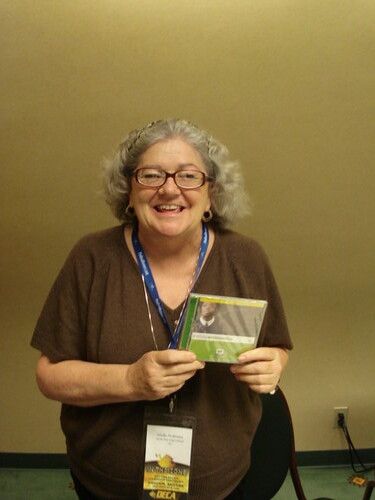
Virtual Economics Winner during Teaching Personal Finance Workshop at WRLC 2008 Conference by Council for Economic Education


  • Average gas prices--September 13, 2010


  • You voted: letter grades edge ahead in fuel economy poll


  • For rent: 4.5 billion-year-old ball of fire


  • What Obama's transportation proposals mean for travelers


  • TomTom provides update for XL 350, XXL 550, and XL 335 GPS devices


  • Cash for appliances: Rebates aplenty in states big and small


  • Apple curtails its free case program for the iPhone 4


  • Daily Dispatch: Death of the RSS reader?; Toronto produces entertaining video to promote e-waste recycling


  • September could be Home Star’s month—or not


  • LG's 60PX950, the first THX 3D plasma, headed to the CR Test labs!


Compare Individual Services, Not Bundles, to Save Money


While bundling services (like cable, phone and internet) can sometimes save you money, personal finance blog Free Money Finance shows us that sometimes, you're better off paying for services separately.

Since bundles often advertise short-term "promotional prices", you may be better off buying services separately from different companies:


I pay AT&T $80 per month for my phone (unlimited long-distance) and DSL (I believe it's the highest speed they offer.) I pay Comcast $35 for cable TV. This is a promotional rate, so let's say I had to pay them $50 as the "standard" rate. Even then, I'm looking at $130 per month versus Comcast's "every day low price" of $146. Tell me again how I'm saving money by bundling?


We've all seen posts touting how bundling your services can save you money. It probably can in some cases. But often those are promotional rates designed to get you hooked. Then once you are, the rates go up to "normal" which are often very high. Consider this a reminder to always do the math and not assume something is cheaper simply because it's bundled.


Now, this is an anecdotal example, so your mileage may vary. It's all very dependent on how many companies are in your area, what technology they're using, and other factors. I, for example, live in a specific part of town where I only have access to one or two companies, such that if I separated my internet and cable TV, it would certainly be more expensive.


That said, if there are a lot of services in your area, this is a pretty good tip—since we often look at the more heavily advertised prices and don't dig deep into looking at the price of each individual service from each company. Of course, you can always just ask for lower prices too. Hit the link to read more, and if you've got your own tips for saving money on subscription services, share them with us in the comments.


online stock trading online stock trading how to lose weight fast

CBS <b>News</b> Comes to the iPad, in Thumbnails

CBS News has a new iPad app, splitting things up into "News" and "Shows" and offering a sea of thumbnails for each. You can save stories for offline reading and watch some full episodes right in the app. Free.

Lujiazui Breakfast: <b>News</b> And Views About China&#39;s Stocks (Sept. 14 <b>...</b>

Investors and traders in China's main financial district in Shanghai are talking about the following before the start of trade today: The renminbi closed at 6.7618 yesterday against the US dollar. That was the highest since 2005.

Denver Broncos <b>News</b> - Horse Tracks - 9/14/10 - Mile High Report

Your Daily Cup Of Orange And Blue Coffee... Horse Tracks!


Virtual Economics Winner during Teaching Personal Finance Workshop at WRLC 2008 Conference by Council for Economic Education


big white booty